
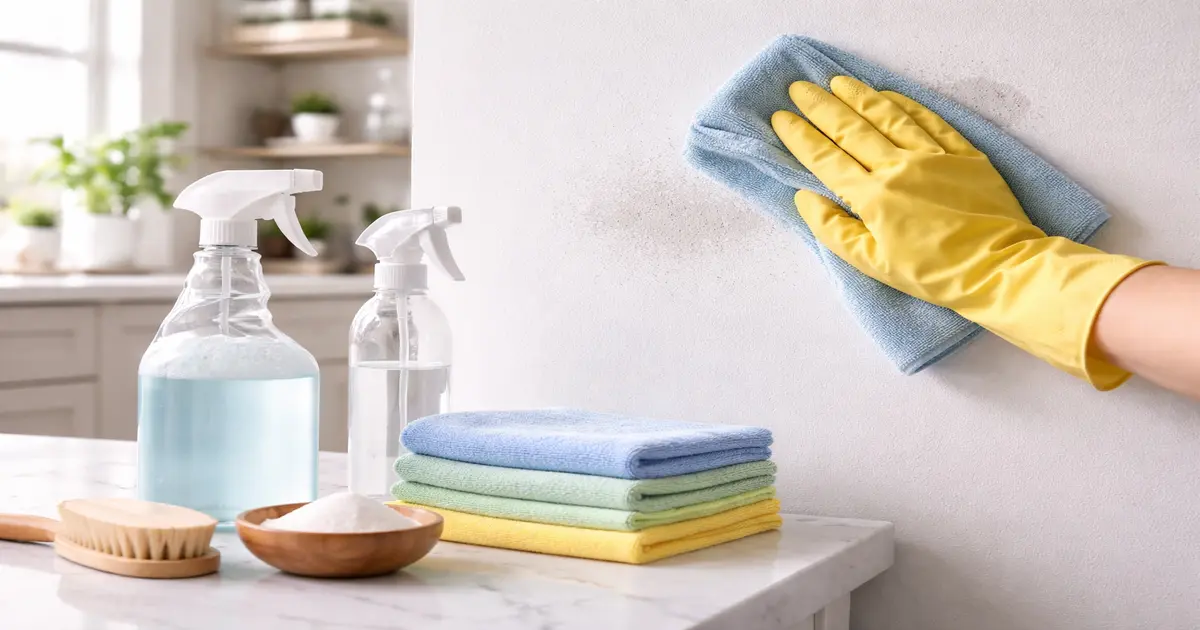
Did you ever clean your walls in fear of doing it so that you would remove the paint as well as the dirt? You’re not alone. Most individuals do not even bother cleaning the walls because they are afraid of destroying the paint only to find dull, dirty or dusty walls. Walls like floors and furniture do accumulate dirt and fingerprints and even concealed germs over a period of time.
It is not to avoid cleaning it is to do it right. Nevertheless, using the right tools and soft approaches, you are able to clean up your walls without damaging the paint and maintain your house clean and well-adorned.
1. The Reason Walls Should be Cleaned on a Regular Basis
The walls are the least considered area of expert cleaning in a house. Nevertheless, they are always exposed to dust, cooking fumes, fingerprints, and stains of accidents. In places such as kitchen and corridors, walls are easily greasy and dull. Cleaning can also be performed regularly to enhance the look of the house as well as to keep the place hygienic by eliminating allergens and bacteria. Walls should be clean and this can make a room bright instantaneously and your space more welcoming.
2. Learning the Various Paint Compositions
You should know the kind of paint to be used before you begin mopping your walls. Paints do not all respond to moisture and cleaning agents in a similar manner. Glossy paints and semi-gloss paints will tend to be more resistant and cleaner whereas, the matte paint or flat paint is more fragile and can easily be destroyed. Such over application of water or rough and tough chemicals on finishes that are in a delicate state can lead to fading, peeling or spotty finishes. The paint type that is used on your wall would give you information on which cleaning method would leave the least amount of toxicity.
3. Selection of the Correct Cleaning Method
The cardinal principle to be observed during the mopping of the walls is to make the process soft. Rather than wetting down the wall, make use of slightly wetened mop or cloth. The surplus moisture may creep into the paint and in the long run, weaken the paint. A weak solution of washing powder e.g. diluted dish soap or light wall cleaner is the best cleaning agent to use since it does not harm the paint. The solution should be tested first on a small but hidden part before being applied across the wall.
4. Safety in Cleaning with the Right Tools
Your equipments are expensive, and they can protect your walls. Ideal type of mop or cloth would be a soft microfiber mop or cloth because this type of mop will not scratch the surface. Do not take stiff scrubbers or stiff brushes they will only leave a mark on the paint. It is possible to use a light mop, which is equipped with a soft head and is able to clean more area without exerting a strain on the floor.
5. Staying on the Right Technique
Technique is also important when it comes to cleaning walls as much as the products you are cleaning. Always have the top parts covered then proceed to the bottom so that dirty water does not drip to previously cleaned sections. Light and circular movements should be applied rather than harsh scrubbing. Excess pressure can either peel off the paint or leave disfigured spots. This aims at removing dirt bit by bit without obliterating the paint.
6. Drying Walls Properly
To prevent the walls getting watermarks or streaks, it is advisable to dry the walls after washing them by the mop. Clean the table with an absorbent microfibre cloth. Correct drying will also ensure that the paint has its finish and will not have moisture flowing through the wall. The drying process can be accelerated and damages can be minimized by good ventilation which can be achieved by opening windows or use of fans.
7. How To Deal with Stubborn Stains?
Special care might be needed with some of the stains such as grease or crayon marks. Rather than scrubbing more vigorously, a slightly more significant yet equally gentle solution should be used and applied carefully to the affected area. This would be enhanced by allowing the solution to rest a few seconds to loosen the stain to be easily removed without destroying the paint. you can also check expert tips to remove grease from kitchen cabinets. The most important thing is patience, ruder scrubbing may be worse than nothing at all.
8. Common Mistakes to Avoid
There are quite a number of individuals who commit errors that may destroy painted walls during the cleaning process. Excessive use of water is among the most frequent mistakes, which may result in the bubble or peeling of paint. The paint can be stripped away or its colour can be faded away by harsh chemicals and strong detergents. Aggression in scrubbing or rough tools may cause scratches and places of unevenness. These are the mistakes that should be avoided so as to have clean and intact walls.
9. Cleaning Walls Tips to Stay Cleaner Longer
Stakeholder Prevention is better than cure. There are easy measures such as wiping fingerprints as soon as it happens, using well-ventilated cooking areas and dusting walls frequently to minimize accumulation. Washable paint in the high traffic areas can also be used making it easier to clean. It is advisable to have a regular cleaning schedule that can ensure that the cleanliness and quality of the walls will always be maintained.
Conclusion
Washing your walls does not necessarily need to be risky and ruin your paint. Mopping walls can be safe with the right approach, tools and methods and can ensure that you have your walls in an acceptable condition that is clean and tidy. The secrets of success are gentle washing, little water and constant repair. With a little bit of extra attention, you can secure your paint and do not ruin your home and make it look bright and cozy.